Khi lập kế hoạch bảo trì, câu hỏi đầu tiên thường không phải là làm khi nào mà là làm những gì. Nếu danh mục công việc thiếu hạng mục, kế hoạch vẫn được duyệt nhưng những khu vực bị bỏ sót sẽ tiếp tục xuống cấp cho đến khi phát sinh sự cố.
Bài viết liệt kê các hạng mục bảo trì nhà máy theo từng nhóm, kèm nội dung kiểm tra chính và tần suất tham khảo, để doanh nghiệp có cơ sở đối chiếu với danh mục hiện tại của mình.
.png)
Việc phân nhóm giúp phân công trách nhiệm rõ ràng và tránh trùng lặp giữa các đợt kiểm tra.
Một cách chia phổ biến gồm bốn nhóm: kết cấu và vỏ bao che, hệ thống kỹ thuật, an toàn và phòng cháy, hạ tầng ngoài nhà xưởng.
Nội dung kiểm tra gồm tình trạng lớp sơn bảo vệ, điểm rỉ sét tại mối hàn và bản mã, độ chặt của bu lông liên kết, biến dạng hoặc võng cục bộ của kèo và xà gồ.
Tần suất tham khảo: kiểm tra tổng thể một lần mỗi năm, ưu tiên khu vực có hơi ẩm hoặc hóa chất.
Đây là nhóm phát sinh sự cố nhiều nhất. Checklist gồm vít bắn tôn và vòng đệm, mối chồng tôn, vật liệu làm kín tại các điểm tiếp giáp, khu vực rỉ sét, máng xối và ống thoát nước đứng.
Tần suất tham khảo: kiểm tra và vệ sinh máng xối trước mùa mưa, kiểm tra bổ sung sau các đợt gió mạnh hoặc mưa lớn bất thường.
.png)
Nội dung gồm tình trạng tấm vách, khe hở tại chân vách, cửa cuốn, cửa trượt, ray dẫn hướng và mô tơ vận hành.
Cửa lớn ở khu vực xuất nhập hàng thường xuống cấp nhanh do tần suất sử dụng cao.
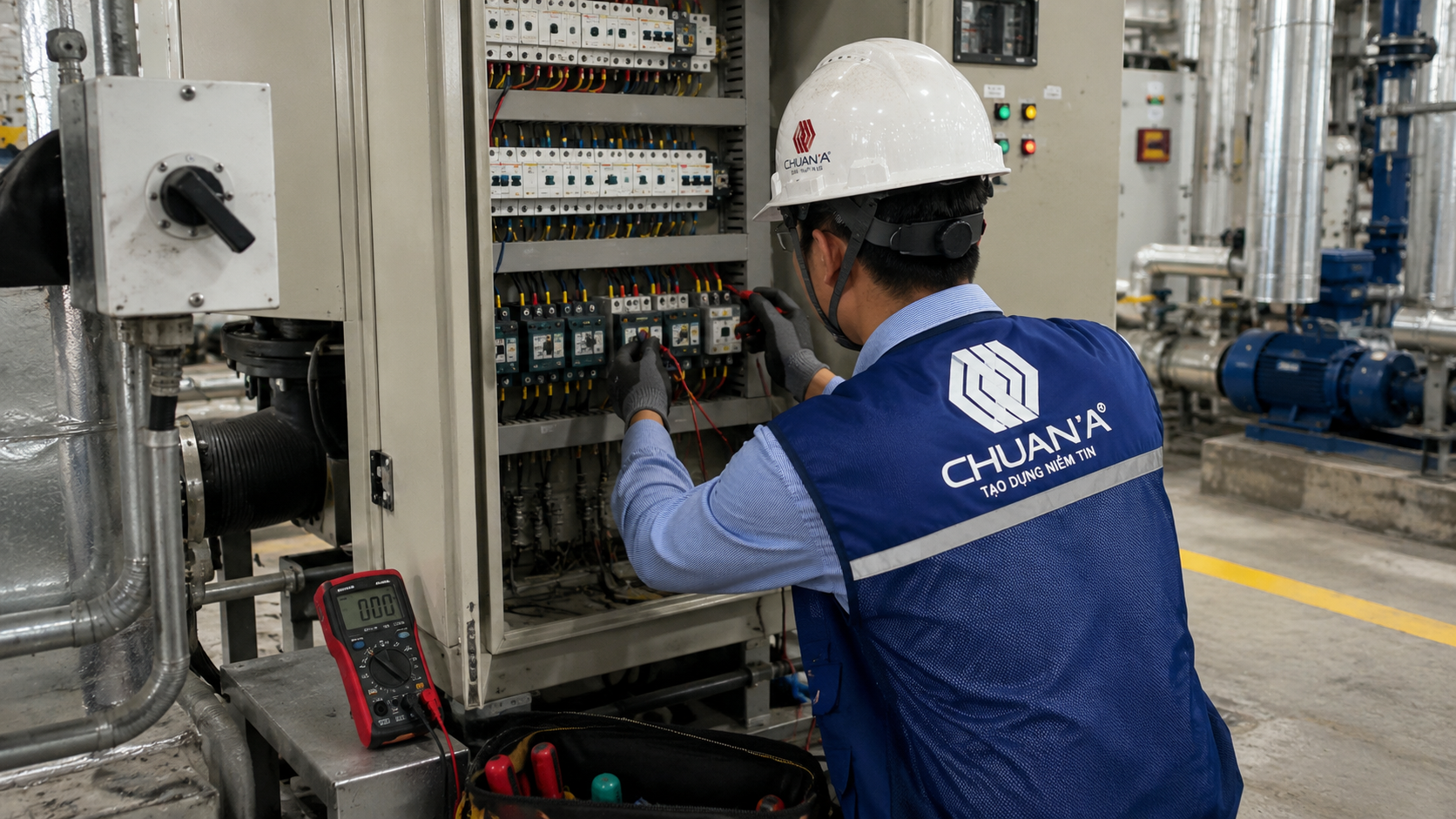
Checklist gồm tủ điện tổng và tủ phân phối, thanh cái, aptomat, điểm đấu nối, máng cáp, hệ tiếp địa và thiết bị chiếu sáng.
Đo nhiệt hồng ngoại tại các tủ điện là biện pháp thường dùng để phát hiện điểm phát nhiệt bất thường. Tần suất tham khảo: sáu tháng đến một năm một lần tùy tải vận hành.
Nội dung gồm bơm cấp nước, bể chứa, tuyến ống, van, hố ga, tuyến thoát nước sản xuất và hệ thống xử lý nước thải nếu có.
Với nhà máy có nước thải chứa dầu mỡ hoặc cặn rắn, hố ga và bẫy cần được nạo vét theo chu kỳ ngắn hơn.
Checklist gồm quạt hút mái, quạt thông gió tường, hệ làm mát bay hơi, động cơ, dây curoa, giá đỡ và tình trạng chống thấm tại điểm xuyên mái.
Vệ sinh cánh quạt và lưới lọc ảnh hưởng trực tiếp đến hiệu quả thông gió và điện năng tiêu thụ.
Nội dung gồm máy nén khí, bình tích áp, bẫy nước, lọc khí và tuyến ống phân phối trong xưởng.
Rò rỉ khí nén là nguyên nhân gây lãng phí điện khó nhận biết nếu không kiểm tra định kỳ.
Nhóm này gồm bơm chữa cháy, bể nước, hệ đường ống, đầu phun, tủ chữa cháy vách tường, bình chữa cháy, hệ báo cháy và đèn thoát hiểm.
Đây là hạng mục có yêu cầu kiểm tra theo quy định, được trình bày riêng trong bài bảo trì hệ thống PCCC nhà máy.
Checklist gồm vết nứt, bong tróc lớp phủ, lún cục bộ tại tuyến xe nâng, khe co giãn và vạch phân luồng giao thông nội bộ.
Xử lý sớm các vết nứt giúp hạn chế nước và bụi thâm nhập xuống lớp nền bên dưới.
Cầu trục, palăng, dầm đỡ, sàn thao tác, cầu thang và lan can cần được kiểm tra liên kết, chống rỉ và mức độ an toàn khi sử dụng.
Các kết cấu phụ trợ thường bị bỏ qua vì không thuộc dây chuyền sản xuất chính.
Nhóm này gồm trần, tường, hệ điều hòa, khu vệ sinh, nhà ăn và kho phụ trợ.
Dù không ảnh hưởng trực tiếp đến sản xuất, đây là khu vực tác động đến điều kiện làm việc hằng ngày của người lao động.
Checklist gồm đường nội bộ, sân bãi, tường rào, cổng, hệ thoát nước mưa, hố ga ngoài nhà và cây xanh.
Tuyến thoát nước mưa nên được kiểm tra trước mùa mưa để hạn chế ngập cục bộ trong khuôn viên.
Không phải hạng mục nào cũng cần chu kỳ giống nhau. Nhóm chịu thời tiết trực tiếp và nhóm liên quan an toàn thường có tần suất cao hơn.
Cách phân bổ theo tháng trong năm được trình bày trong bài lập kế hoạch bảo trì nhà máy hàng năm.
Một checklist chỉ phát huy giá trị khi kết quả kiểm tra được ghi lại theo cùng một định dạng qua các đợt.
Mỗi mục nên có vị trí, tình trạng, hình ảnh và biện pháp xử lý. Sau vài chu kỳ, dữ liệu này cho thấy khu vực nào xuống cấp nhanh và cần đưa vào ngân sách ưu tiên.
Bảo trì nhà máy bao phủ phạm vi rộng hơn nhiều so với hình dung ban đầu, từ kết cấu thép, mái tôn, hệ điện, cấp thoát nước, thông gió, PCCC cho đến nền sàn và hạ tầng ngoài nhà.
Khi danh mục được liệt kê đầy đủ và gắn với tần suất phù hợp, doanh nghiệp tránh được tình trạng bỏ sót hạng mục và có cơ sở rõ ràng để lập kế hoạch cũng như dự trù chi phí. Phạm vi tổng thể của một chương trình bảo trì được mô tả trong bài dịch vụ bảo trì nhà máy Đồng Nai.
Mỗi nhà máy có đặc thù riêng về công năng, vật liệu và môi trường vận hành. Khảo sát hiện trạng giúp xác định danh mục hạng mục phù hợp và mức độ ưu tiên cho từng khu vực.
CÔNG TY CP ĐẦU TƯ XÂY DỰNG CÔNG TRÌNH CHUẨN A
Địa chỉ: Trung tâm dịch vụ KCN Amata, phường Long Bình, tỉnh Đồng Nai, Việt Nam.
Hotline: 0907 494 549
Email: info@chuana.com.vn
Website:https://chuana.com.vn/
Liên hệ Chuẩn A để trao đổi nhu cầu khảo sát, lập checklist và triển khai bảo trì nhà máy tại Đồng Nai.


