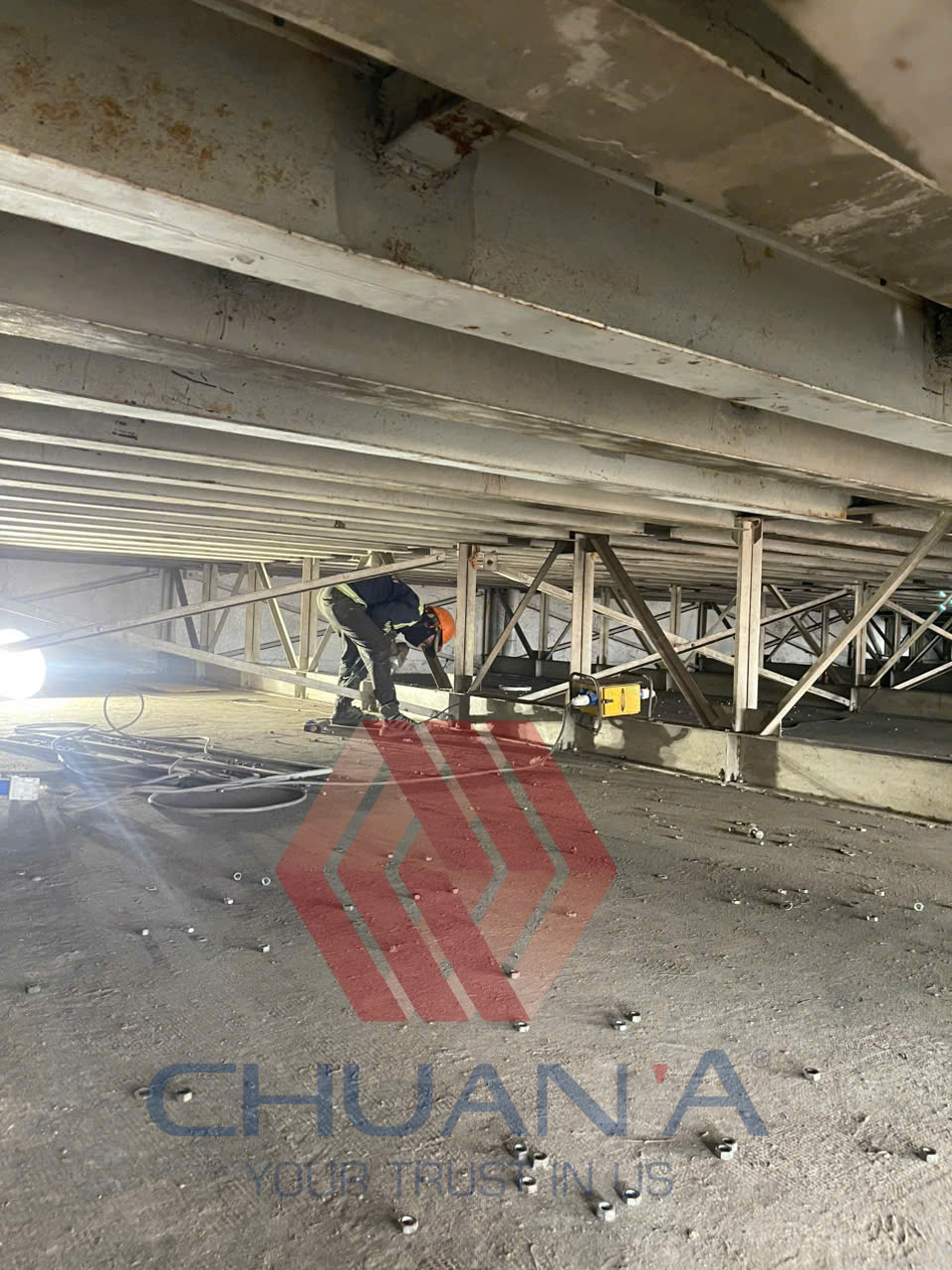
The Container Dock Leveler system serves as a vital operational artery within the loading and unloading docks of large-scale manufacturing facilities. For …, maintaining a highly reliable, precise, and heavy-duty dock levelling system is a mandatory prerequisite to guarantee continuous 24/7 inbound and outbound material movement.
Following extended high-intensity operations under heavy loads imposed by industrial forklifts and specialized container trucks, structural wear and tear were identified in the dock pit framing. To elevate occupational safety standards, optimize logistics throughput, and adhere strictly to Japanese industrial facility engineering standards, plant management officially commissioned the project: Container Dock Floor Renovation.
On August 3, 2026, the project entered its critical demolition phase, focusing on dismantling existing steel structures, clearing pit obstacles, and preparing the subbase for heavy mechanical upgrades. This report synthesizes technical data, personnel allocation, equipment utility, progress metrics, and environmental health and safety (EHS) controls implemented on-site under the supervision of Site Engineer …
Renovating an industrial container dock floor demands absolute precision during both dismantling and installation phases. Any minor deviation in elevation or mechanical connection can result in structural misalignment, excessive vibration, or severe safety hazards during forklift loading cycles.
The core engineering objectives include:
Dismantling of Legacy Structural Steelwork: Complete removal of degraded load-bearing beams, perimeter frames, and structural connection components.
Pit Subbase & Concrete Preparation: Cleaning, leveling, and structural anchoring reinforcement using high-strength anchor bolts.
Fabrication & Installation of New Dock Levelers: Ensuring static and dynamic load balance, superior over-capacity resilience, and seamless integration with new hydraulic and mechanical controls.
During the work shift on August 3, 2026, the construction crew focused on completing two primary site clearing tasks:
Engineering Challenge: The legacy steel dock frame was secured to concrete foundation beams via high-tensile anchor bolts. Due to prolonged exposure to dynamic shock loading and ambient humidity, several bolting points experienced thread deformation or severe corrosion binding.
Operational Execution:
Site technicians conducted a comprehensive 100% inspection of all perimeter bolting points along the dock pit.
Applied specialized rust-penetrating lubricants to seized threaded assemblies.
Utilized high-torque bolt tightening machinery to quickly unfasten standard nut connections.
For stripped, deformed, or spot-welded bolts from previous temporary repairs, workers performed mechanical flush-cutting using precision hand angle grinders, ensuring zero damage to adjacent concrete foundation walls.
Engineering Challenge: The main load-bearing steel dock frame consists of thick structural steel sections (I-beams and heavy steel channels). Conventional oxy-fuel thermal cutting can induce excessive heat distortion in surrounding metal parts and produce heavy slag accumulation.
Applied Engineering Solution: The team deployed industrial Plasma Cutting Equipment.
Key Advantages:
High cutting speed delivering clean, narrow kerf profile cuts with minimal slag.
Concentrated heat input, significantly reducing heat-affected zones (HAZ) and structural thermal warping.
Enhanced worker safety through reduced physical exposure to high-temperature flame zones.
Standard Operating Procedure: Technicians marked cutting lines strictly following approved shop drawings signed by Supervisor Nguyen Manh Thai. Cut steel segments were fitted with temporary lifting lugs, hoisted out of the dock pit safely, and moved to designated scrap staging areas according to Toshiba factory housekeeping rules.
To guarantee project quality and maintain schedule compliance for the client, site staffing and tool availability were systematically organized:
01 Senior Site Supervisor…
Responsibilities: Overall schedule management, technical quality assurance, EHS enforcement, site log documentation, and daily coordination with Toshiba Plant Management.
03 Certified Mechanical Technicians:
Qualifications: Certified in hot-work safety, industrial rigging, and machine operations, possessing over 3 years of hands-on experience in industrial steel structure demolition and installation.
High-Torque Bolt Tightening Machine: Heavy-duty electric/battery-powered tool allowing rapid and precise unbolting of high-tensile fasteners.
Hand Angle Grinders / Cutters: Used for trimming auxiliary steel components, edge chamfering, and metal surface cleaning post-cutting.
Industrial Plasma Cutting Machine: Primary cutting equipment for heavy steel section demolition, operating reliably on factory power infrastructure.
Inverter Arc Welding Machine: Maintained on standby for temporary tack-welding, attaching hoisting lugs, and structural stabilization during dismantling.
Report Date: August 3, 2026
Cumulative Completed Work Volume:12%
Overall Project Timeline:
Target Handover Date:September 23, 2026
Remaining Execution Window: 51 Days
Site Supervisor Assessment …
The 12% milestone achieved on August 3, 2026, fully aligns with the approved Critical Path Method (CPM) schedule.
Demolition progressed smoothly without revealing unmapped structural defects inside the dock pit. This establishes an ideal foundation for upcoming work packages, including pit base concrete infill, new anchor installation, and heavy crane placement of imported Dock Levelers.
Toshiba Industrial Products Co., Ltd. enforces strict EHS regulations. Throughout the execution shift on August 3, 2026, site leadership maintained rigorous compliance:
Fire Prevention & Control (Hot Work Protocol):
Due to high-temperature sparks from plasma cutting, the work zone was equipped with a minimum of two CO2 and two ABC dry chemical fire extinguishers.
Assigned a dedicated Fire Watch technician during all plasma cutting operations and maintained vigilance for 30 minutes post-shift.
Personal Protective Equipment (PPE):
100% of site personnel wore mandatory PPE: Safety helmets, steel-toe puncture-resistant boots, plasma cutting face shields, heat-resistant leather welding gloves, anti-fume respirators, and high-visibility vests.
Site Barricading & Hazard Isolation:
Installed rigid barricades and warning tape around the perimeter of the open container dock pit.
Displayed prominent warning signs ("CONSTRUCTION ZONE - AUTHORIZED PERSONNEL ONLY") to eliminate fall risks for warehouse staff and prevent collisions with active forklift traffic.
CHUAN'A CONSTRUCTION INVESTMENT JOINT STOCK COMPANY


