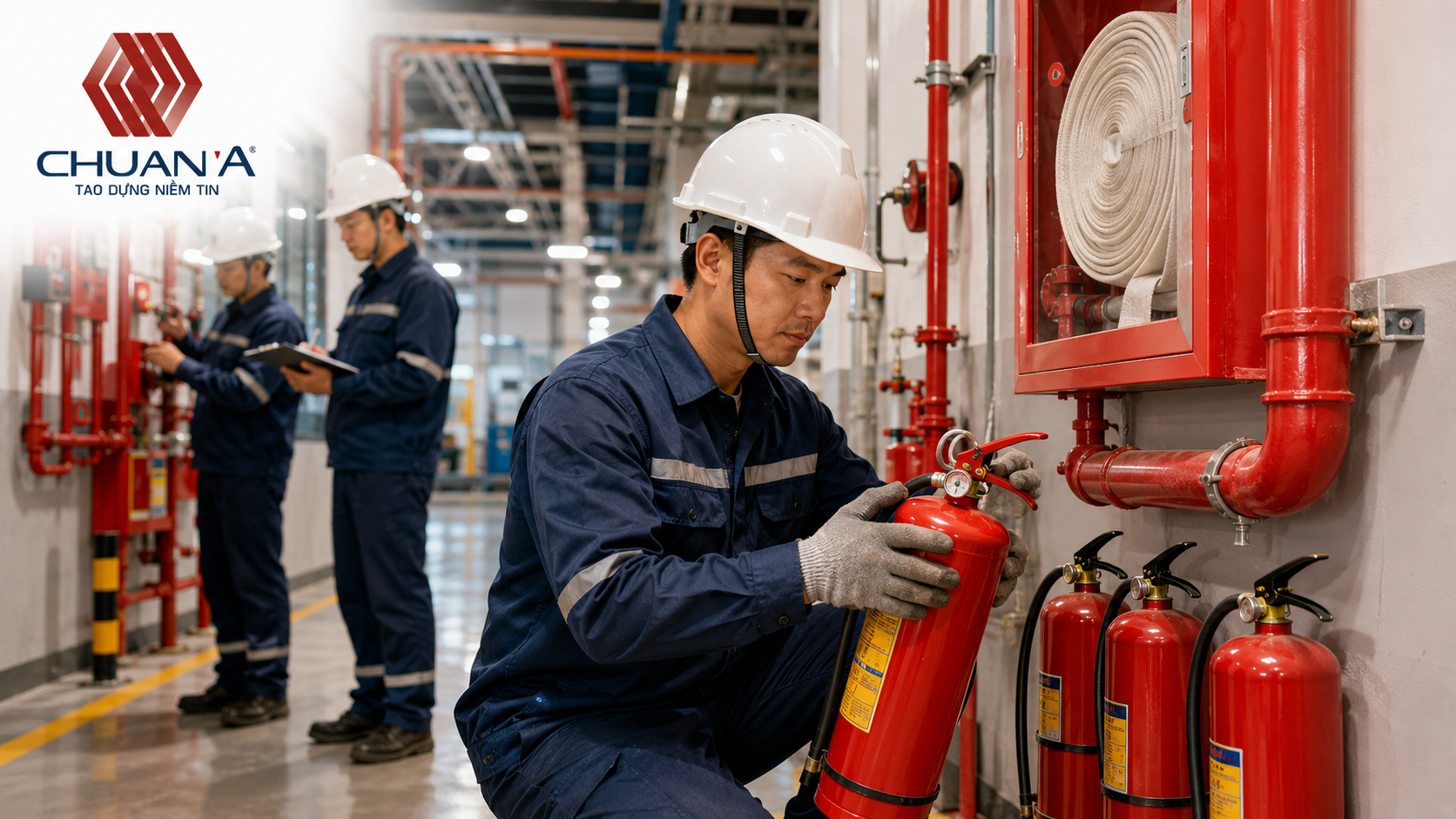
Fire protection system maintenance must be performed periodically to ensure that the factory is always ready to respond during an emergency. A dusty detector, a depressurized extinguisher, a stuck valve, or a pump that fails to start can expose a business to serious risks when a fire occurs.
Many fire protection systems remain silent for long periods after acceptance. That silence can create a false sense of security. However, every device has a service life, while factory environments often include dust, heat, oil vapor, humidity, and vibration. Without periodic inspection, businesses cannot know whether the system still works correctly.
.png)
Maintenance helps detect equipment problems early and ensures that fire alarm and firefighting systems operate when needed. It also extends equipment life, reduces major repair costs, supports safety inspection requirements, and builds a prevention culture within the business.
In factories, fire and explosion risks often come from electricity, machinery, materials, solvents, dust, heat, and continuous production activities. A good fire protection system that is not maintained will gradually lose reliability. When it needs to operate in a real situation, it may not respond as originally designed.
Businesses should inspect the fire alarm control panel, power supply, backup battery, smoke detectors, heat detectors, manual call points, alarm bells, alarm lights, signal cables, and transmission capability. Sample tests should be performed in multiple areas to ensure that the system receives signals correctly, provides clear warnings, and does not show abnormal faults.
Detectors in dusty environments should be cleaned periodically. If too much dust builds up, detectors may lose sensitivity or create false alarms. Frequent false alarms are also dangerous because they can make workers less responsive. A good fire alarm system must warn at the right time, in the right area, and clearly enough for quick action.
.png)
Fire extinguishers should be checked for pressure, seal condition, cylinder body, hose, inspection label, placement, and accessibility. They should not be blocked by goods, machinery, or other objects. The distance and quantity of extinguishers should match the risk level of each area.
Workers should also be trained on how to use extinguishers. A full extinguisher is not effective if nobody knows how to operate it. Therefore, equipment maintenance should be combined with safety awareness training for the operating team.
The water-based firefighting system includes pumps, pipes, valves, pressure gauges, hydrants, sprinklers, and water tanks. It is necessary to check pressure, leakage, pump startup ability, valve operation, and sprinkler cleanliness. Areas with high storage should be inspected to make sure sprinklers are not blocked.
Fire pumps should be test-run according to a plan. If pumps remain idle for many months, they may fail when real operation is required. Valves and pressure gauges should also be inspected to ensure that the system remains ready.
Each maintenance session should include a record, checklist of inspected items, detected problems, photos if needed, corrective actions, and responsible persons. Documentation helps businesses track system history, work more smoothly during inspections, and plan equipment replacement.
Documentation also prevents the system from being managed by memory. A large system cannot be managed by feeling. With clear maintenance history, businesses can identify which devices need replacement, which areas often have issues, and how maintenance budgets should be allocated.
Businesses should inspect the system immediately if the fire alarm panel shows faults, extinguishers lose pressure, pipes leak, pumps make unusual noises, valves are hard to turn, detectors create frequent false alarms, exit lights do not work, escape routes are blocked, or the factory layout changes.
In addition, after renovation, machine relocation, or rack layout changes, the fire protection system should be reassessed to ensure it remains suitable. A small layout change can affect the protection efficiency of sprinklers, detectors, or escape routes.
Chuẩn A can support businesses in inspecting, consulting, maintaining, and upgrading factory fire protection systems. With experience in industrial construction, M&E, and fire protection, Chuẩn A understands that maintenance is not only about checking equipment, but also about evaluating whether the system still matches real operating functions.
Fire protection system maintenance is a small task when performed regularly, but it can become a major risk when forgotten. A clear checklist helps businesses keep the system ready, protect people, assets, and production activities. The larger the factory, the more disciplined maintenance must be. Safety is not just a sign on the wall, but a system that is inspected and operated correctly every day.
CHUAN'A CONSTRUCTION INVESTMENT JOINT STOCK COMPANY


