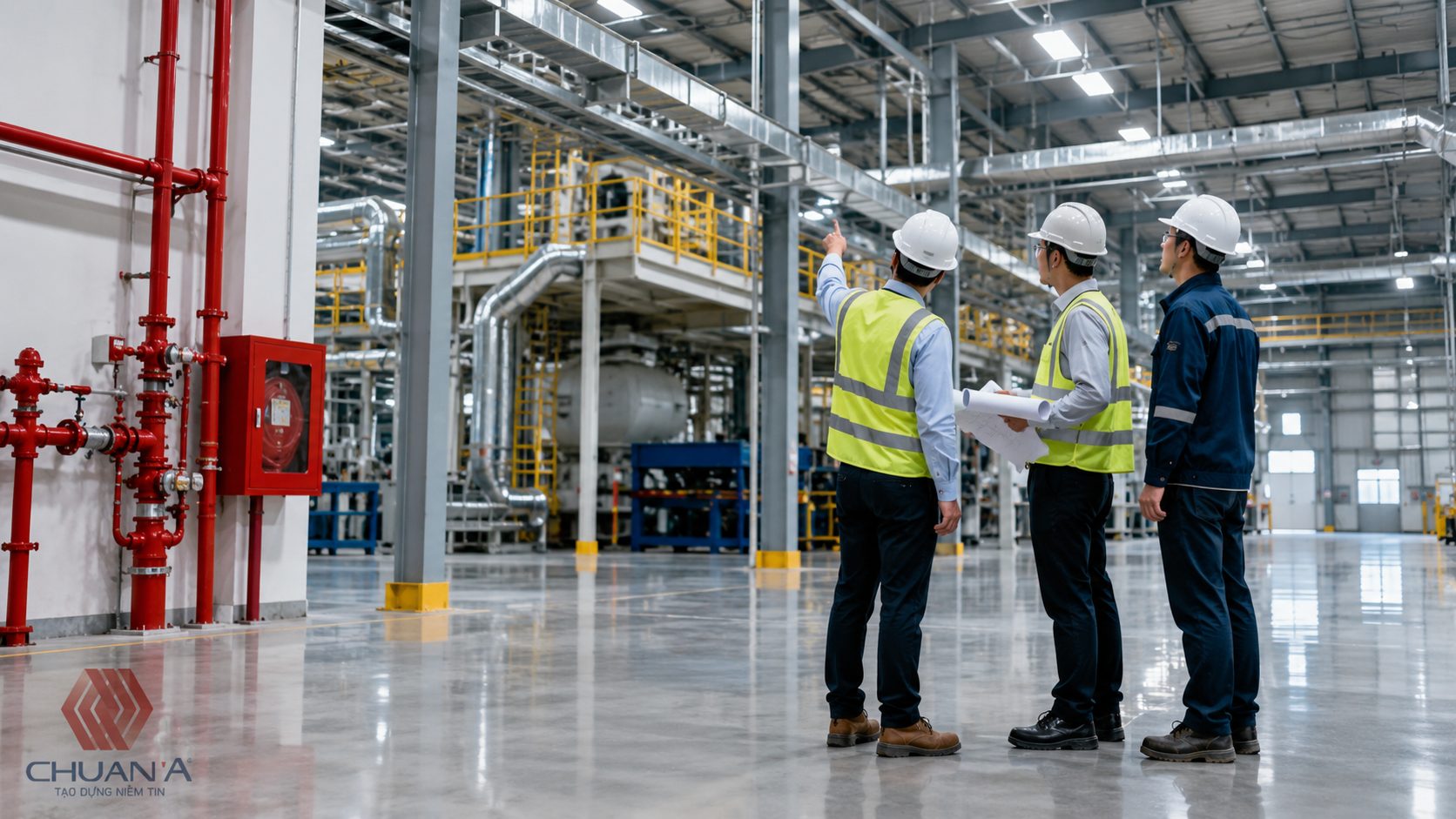
Choosing a reliable industrial construction contractor is one of the most important decisions when a business invests in a factory, manufacturing plant, logistics warehouse, or technical facility. A good contractor does not only help the project finish on schedule. It directly affects quality, cost, safety, acceptance, and long-term operating efficiency.
In industrial construction, choosing the wrong contractor can create serious consequences. The project may face delays, cost overruns, conflicts between M&E and fire protection, insufficient floor load, inadequate electrical capacity, incomplete handover documents, or difficulty expanding in the future. Therefore, investors should not look only at the lowest price. They need to evaluate the contractor’s overall capability.
A reliable industrial construction contractor is like the captain of the project ship. Drawings are the map, budget is the fuel, schedule is the tide, and the construction site is a sea with wind, hidden rocks, and unexpected waves. Choose the right captain, and the project has a much better chance of reaching shore safely.
(1).png)
Industrial facilities are much more complex than ordinary residential buildings. A factory does not only include basic construction work. It also includes load-bearing structure, industrial flooring, roofing and cladding, industrial electricity, water supply and drainage, ventilation, lighting, fire protection, yard infrastructure, internal roads, factory offices, and many technical systems.
If the contractor lacks experience, problems can appear from the design stage. The layout may not fit operation, the structure may not calculate loads properly, M&E may lack capacity, fire protection may be difficult to approve, or infrastructure may not support vehicle movement. These problems do not only increase construction cost. They can affect operation for many years.
In contrast, an experienced contractor knows how to ask the right questions before designing. They need to understand what the business produces, where machinery will be placed, how heavy the loads are, how goods are stored, how forklifts move, what electrical capacity is needed, how fire protection should be arranged from the beginning, and whether the facility needs future expansion.
Experience is the first criterion when choosing an industrial construction contractor. A company that mainly builds townhouses, residential offices, or small projects may not fully understand factories, manufacturing plants, or industrial warehouses. Industrial facilities require operational thinking, load understanding, technical system knowledge, and the ability to coordinate many work items at the same time.
Investors should find out what types of projects the contractor has completed. Have they worked on production factories, logistics warehouses, pre-engineered steel buildings, M&E coordination, fire protection coordination, or projects inside industrial parks? These questions help evaluate whether the contractor fits the project.
Experience is not only the number of years in business. It also shows in the ability to handle real site situations. Industrial construction sites always involve variables such as weather, material supply, soil conditions, function changes, industrial park requirements, machinery delivery schedules, or investor adjustments. An experienced contractor reacts calmly and provides solutions instead of letting the project drift into fog.
(1).png)
A reliable industrial construction contractor should not only build according to existing drawings. They should be able to advise on solutions, comment on layouts, propose structures, review M&E, coordinate fire protection, and optimize costs according to the investor’s real needs.
At the beginning, the contractor should ask functional questions. Is the facility for production or storage? How heavy are the machines? What warehouse height is required? Will container trucks enter the site? How many people will work in the office? Is a separate technical room needed? Are goods flammable? Does the business plan to expand later? The sharper the questions, the clearer the solution.
Design capability also appears in discipline coordination. Architecture, structure, M&E, fire protection, and infrastructure cannot be separated. If the design is fragmented, the project can face conflicts during construction. For example, fire pipes may conflict with beams, cable trays may conflict with air ducts, sprinklers may be blocked by racks, or electrical panels may be located in inconvenient positions.
Investors should evaluate how the contractor presents the solution. A professional company can explain why a solution is chosen, what its advantages and disadvantages are, how it affects cost, and whether it supports long-term operation.
Construction capability is what turns drawings into a real facility. A contractor may have attractive documents, but if site organization is weak, the project can still be delayed or delivered with inconsistent quality. Therefore, investors should consider technical staff, site managers, workers, equipment, material suppliers, and construction management processes.
The contractor needs a clear construction plan, including schedule by stage, responsible personnel, construction methods, safety measures, material planning, and coordination between teams. In industrial construction, many work items can run in parallel, so coordination ability is very important.
Investors should also observe how the contractor manages the site. A clean site with warning signs, organized material storage, workers using protective equipment, safe walkways, and quality inspection procedures often reflects stronger management capability. A construction site rarely lies. It whispers the truth through every material pile, every temporary cable, and every safety helmet.
M&E and fire protection are two major work item groups in industrial construction. A trustworthy contractor should understand how to coordinate these systems with architecture and structure from the design stage. If M&E and fire protection are treated as final add-ons, the project can easily face conflicts.
M&E includes power distribution, lighting, water supply and drainage, ventilation, air conditioning, compressed air, cameras, networks, and production utilities. Fire protection includes fire alarm systems, firefighting systems, sprinklers, pumps, extinguishers, escape routes, emergency lights, and related documents. These two groups directly affect operation and safety.
Investors should ask whether the contractor can coordinate M&E and fire protection internally or relies entirely on external teams. If many companies are involved, who is responsible for coordinating drawings, resolving conflicts, and ensuring acceptance? The clearer the answer, the lower the risk.
In modern factories, M&E and fire protection are not vines growing after the building is finished. They are technical arteries that must be drawn together with the structure so the facility can breathe, light up, run, and protect itself properly.
One common mistake is choosing a contractor based only on the lowest quotation. In industrial construction, two quotations may look similar but have very different scopes. One quotation may include foundation, structure, roofing and cladding, M&E, fire protection, infrastructure, and handover documents. Another may include only basic construction.
Therefore, when comparing quotations, investors should review every work item carefully. They should check materials, technical standards, quantities, M&E scope, fire protection scope, yards and infrastructure, office areas, acceptance documents, warranty, and variation conditions.
A low price is not wrong, but a low price with missing scope is a gift box with no bottom. Once opened on site, the investor may discover many things still need to be purchased. The right choice is not the lowest price, but the most suitable price with clear scope and controllable quality.
Schedule is critical for many industrial projects. A delayed factory handover can affect machinery delivery, recruitment, trial production, manufacturing contracts, and cash flow. Therefore, the contractor must be able to prepare a realistic schedule and make clear commitments.
Investors should ask the contractor to present the schedule by stage, including design, material preparation, foundation work, structure erection, roofing and cladding, M&E installation, fire protection installation, finishing, acceptance, and handover. The schedule should have logic, not just a few general lines.
A professional contractor knows which items can run in parallel, which items must wait, which materials need early ordering, and which risks may affect the schedule. They should also have solutions for bad weather, material delays, or design changes.
A good schedule is not simply a fast promise. A good schedule is a piece of music with rhythm, pauses, crescendos, and someone who knows when to accelerate without breaking the melody of quality.
Construction quality does not suddenly appear on handover day. It is created through daily control. A reliable contractor needs a clear quality management process, from incoming material inspection and construction inspection to stage acceptance, error correction, and document storage.
Investors should ask how the contractor controls materials. Do materials have certificates? Who checks them before construction? How are technical standards confirmed? Do replacement materials require investor approval? For important items such as steel, concrete, roofing sheets, cables, electrical panels, fire pumps, and fire alarm devices, material control must be strict.
During construction, stage acceptance helps detect errors early. Foundation, structure, flooring, roofing and cladding, M&E, fire protection, and finishing should all have inspection records. If acceptance is done only at the end, many issues may be hidden or difficult to repair.
A quality facility is the result of countless small decisions done correctly. It does not shout. It simply stands there, steady as an answer that needs no explanation.
Labor safety is an essential criterion when choosing an industrial construction contractor. Factory construction sites often involve work at height, steel erection, lifting equipment, welding, cutting, temporary electricity, heavy materials, and many teams working at once. If the contractor does not manage safety well, accident risks increase greatly.
The contractor should prepare safety measures before construction, provide protective equipment for workers, fence dangerous areas, install warning signs, control lifting equipment, manage temporary electricity, and supervise the site regularly. These should not exist only in documents. They must be visible on site.
For investors, a safety incident can affect schedule, cost, reputation, and legal responsibility. Therefore, choosing a contractor with a safety culture protects the entire project. A durable facility should not be built by luck hanging from scaffolding.
Before signing, investors should review the contractor’s legal documents and commitment capability. The contract should clearly state work scope, value, schedule, payment terms, materials, technical standards, warranty, responsibilities, acceptance, handover documents, and variation handling.
The contract should not be too vague, especially for industrial projects with many technical work items. Details that commonly cause disputes, such as M&E, fire protection, infrastructure, equipment, as-built documents, variations, warranty, and handover date, should be clearly written. A clear contract is the legal fence that keeps the project from wandering into the field of arguments.
Warranty also deserves attention. Investors should clarify warranty duration, warranty scope, issue handling process, and responsibility after handover. A reliable contractor does not disappear after completion. It remains responsible when the facility begins operation.
An industrial facility does not end after handover. Once in operation, a factory may need maintenance, repairs, M&E upgrades, fire protection maintenance, office renovation, warehouse expansion, additional production lines, or production layout changes. Therefore, a contractor who can support long-term operation is a major advantage.
A contractor that understands the facility from the beginning can provide better support when the business needs renovation or expansion. They already know the structure, M&E, fire protection, infrastructure, as-built documents, and operating logic. This reduces re-survey time and limits risks when modifying an operating facility.
Investors should view the contractor as a technical partner, not only a one-time builder. In manufacturing, changing needs are normal. A good long-term contractor helps the facility adapt without turning every upgrade into a stressful surgery.
A reliable contractor usually has a clear working process from survey, consulting, design, quotation, contract signing, construction, acceptance, to handover. They do not rush to give a price before understanding requirements, do not promise unrealistic schedules, and do not avoid technical questions from the investor.
A good contractor is also transparent about work scope, materials, technical standards, and responsibilities. When risks appear, they warn the investor early. When changes happen, they explain the impact on cost and schedule. When errors occur, they provide clear solutions.
Most importantly, a reliable industrial construction contractor understands the facility as an operating system. They do not only build the outer shell. They also care about electricity, water, ventilation, fire protection, vehicle flow, flooring, warehouse function, office areas, and future expansion. System thinking is the difference between a basic construction team and a true industrial partner.
The first mistake is choosing based on the lowest price without checking scope. This is very common and often leads to variations. Investors must read quotations carefully to know which items are included, which are excluded, and what material standards are used.
The second mistake is not checking the contractor’s industrial experience. A contractor that is good at residential projects may not be suitable for factories. Industrial construction requires knowledge of operation, loads, M&E, fire protection, and production schedule.
The third mistake is ignoring handover documents. If the project lacks as-built drawings, M&E documents, fire protection documents, and equipment manuals, future maintenance becomes difficult. Documents are not decorative paperwork. They are the technical map of the facility.
The fourth mistake is ignoring after-sales responsibility. A contractor that disappears after handover can create problems when defects appear or upgrades are needed. Therefore, post-project responsibility should be considered from the beginning.
Chuẩn A focuses on integrated industrial construction solutions, including consulting, design, factory construction, office construction, M&E systems, and fire protection. This approach helps investors work with a company that can view the facility as a complete system instead of handling disconnected parts.
For projects in Dong Nai, Binh Duong, and nearby regions, Chuẩn A can support businesses from requirement survey and solution planning to construction, completion, and handover. Integration between construction, M&E, and fire protection helps reduce technical conflicts, control schedule, and create a safer operating foundation for factories, manufacturing plants, and warehouses.
What criteria should investors use to choose an industrial construction contractor?
Investors should evaluate industrial experience, design capability, construction execution, M&E and fire protection coordination, transparent quotation, schedule, quality management, labor safety, contract terms, and post-handover responsibility.
Should investors choose the contractor with the lowest price?
No. Investors should not choose only by the lowest price. They need to review work scope, materials, technical standards, handover documents, and possible missing items. A low price with missing scope can increase real project cost.
Does an industrial construction contractor need to understand M&E and fire protection?
Yes. M&E and fire protection directly affect operation, safety, and acceptance. The contractor should be able to coordinate these systems with architecture and structure from the design stage.
Choosing a reliable industrial construction contractor is essential to ensure that factory, manufacturing plant, or warehouse projects are delivered safely, on schedule, and efficiently. Investors should not look only at price. They should evaluate design, construction, M&E, fire protection, quality management, labor safety, and post-handover responsibility as a whole. With integrated industrial construction solutions, Chuẩn A can accompany businesses in industrial projects in Dong Nai, Binh Duong, and nearby areas.
CHUAN'A CONSTRUCTION INVESTMENT JOINT STOCK COMPANY


