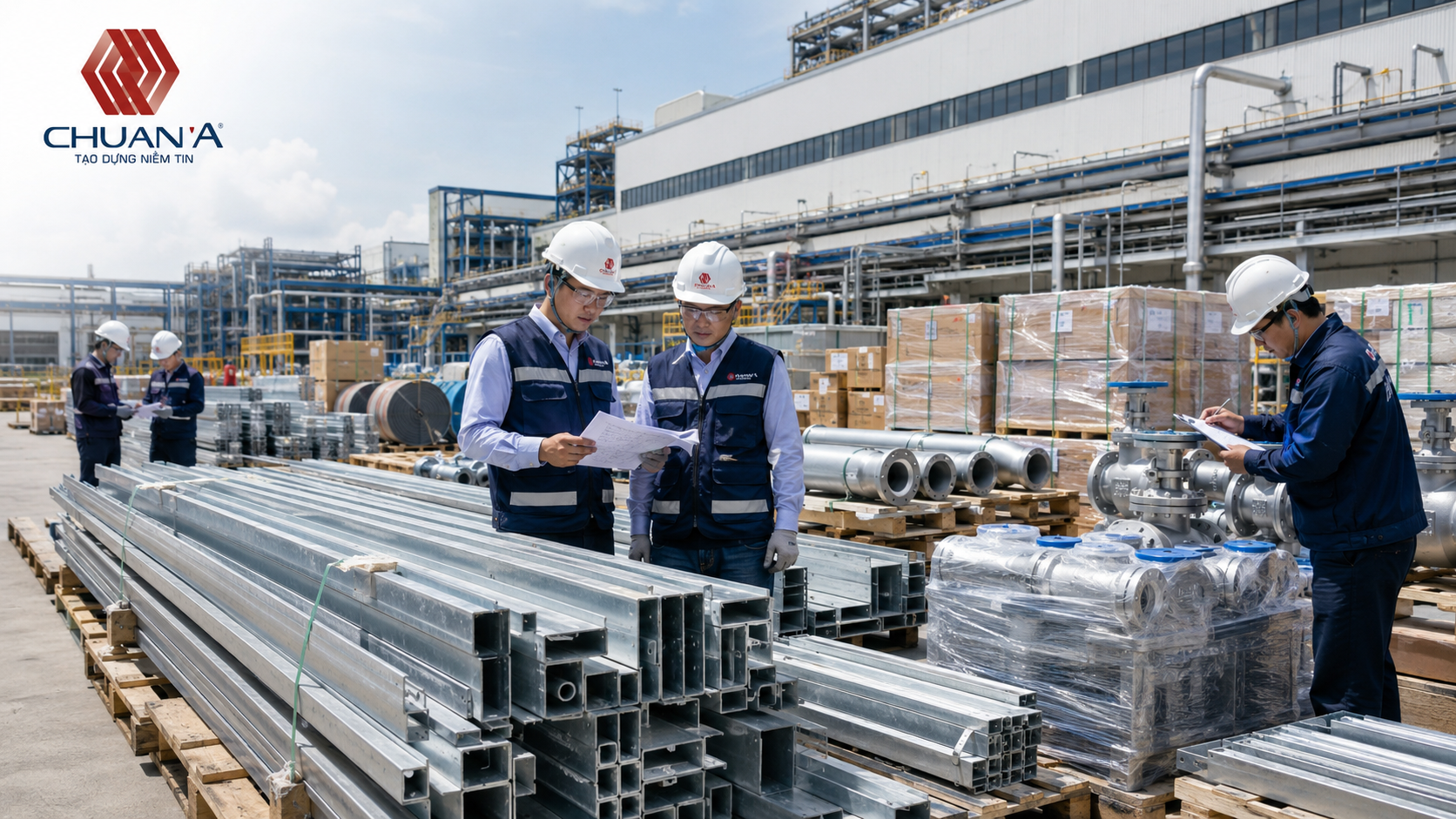
Pre-engineered steel buildings are becoming one of the most outstanding solutions in industrial factory construction. When businesses need a facility that can be completed quickly, expanded easily, and built with optimized costs, steel structure is a highly suitable option. In 2026, this trend continues to grow, especially in industrial parks where factories, warehouses, production workshops, and logistics centers are in high demand.
A pre-engineered steel building is not simply a steel frame erected quickly. It is a system designed, fabricated, and installed according to a calculated process. Steel components are manufactured in a factory, then transported to the construction site for assembly. As a result, on-site construction time is shortened, the site becomes cleaner, and component quality is easier to control.
(1).png)
A pre-engineered steel building uses pre-designed and pre-fabricated steel components, including columns, rafters, beams, purlins, bracing systems, roofs, and wall systems. After fabrication, the components are delivered to the site and assembled using bolts, welding, or suitable connection methods.
This solution is commonly used for factories, warehouses, industrial showrooms, manufacturing plants, mechanical workshops, logistics warehouses, and many wide-span buildings. Its biggest advantage is the ability to create large open spaces with fewer internal columns, making it easier to arrange machinery and move goods.
The first reason is fast construction. Since components are fabricated in advance, foundation work can be prepared on site while steel fabrication takes place in the workshop. When the steel arrives on site, installation can happen faster than many traditional construction methods.
The second reason is flexibility. Pre-engineered steel buildings can be expanded, repurposed, or adjusted more easily. For manufacturing businesses, expansion capability is important because market demand can change quickly. The third reason is long-term cost optimization, because construction time is shorter and the operating space is more efficient.
(1).png)
Designing a pre-engineered steel building requires consideration of roof load, wind load, suspended equipment load, clear height, span, column spacing, foundation, door areas, ventilation, lighting, M&E, and fire protection. If the design only optimizes the steel frame and ignores operation, the facility may become inconvenient during use.
A factory with forklift traffic needs suitable flooring and doors. A high-rack warehouse needs proper fire sprinklers, lighting, and rack spacing. A workshop with heat-generating machines needs good ventilation. Therefore, steel structure must be planned together with operational functions, not just external appearance.
The process usually includes needs assessment, technical design, component fabrication, foundation preparation, steel delivery, main frame erection, purlin installation, roofing, wall cladding, bracing, door installation, and technical system completion. During erection, labor safety is critical because workers operate at height and use lifting equipment.
After the steel frame is completed, M&E and fire protection systems must be installed in coordination. If pipe supports, cable tray routes, lights, fans, and sprinklers are planned from the beginning, the facility will be cleaner and more efficient. If technical routes are only discovered after installation, adjustments will take more time.
The first mistake is looking only at the price per square meter without reviewing the technical configuration. Two buildings with the same area may differ greatly in load requirements, height, roof materials, steel thickness, protective coating, and supporting systems.
The second mistake is not considering future expansion. If the business later wants to extend the factory, add cranes, or increase equipment load, the initial design must include suitable allowances. The third mistake is ignoring heat reduction, ventilation, and roof drainage. A steel building that looks good but is hot, noisy, or leaking will reduce operational efficiency.
Chuẩn A can support businesses from concept consulting and design to factory construction, M&E coordination, and fire protection integration. With pre-engineered steel buildings, the goal is not only to erect the frame quickly but also to create a facility that operates well.
When structure, technical systems, and safety are calculated together, the factory becomes more durable and has fewer issues during operation. This approach is suitable for businesses that want to build manufacturing plants, warehouses, or production workshops for long-term use.
Pre-engineered steel buildings match the needs of industrial construction in 2026: fast, flexible, durable, and easy to expand. However, to achieve real efficiency, businesses need a contractor with integrated design and construction capability. A good steel building should not only stand strong on drawings, but also operate steadily under daily production demands.
CHUAN'A CONSTRUCTION INVESTMENT JOINT STOCK COMPANY


